
Not the Usual Suspects at Prince Wine Store
Wine Curator
WSET Diploma · Vivino Top 50 reviewer, Australia
Published · Last reviewed
Most of the tastings I go to are built around a single idea. One region, one grape, a vertical from one producer. You walk in already knowing the shape of the evening, and the interest comes from the variations inside that frame. It is a good format. It is also a comfortable one.
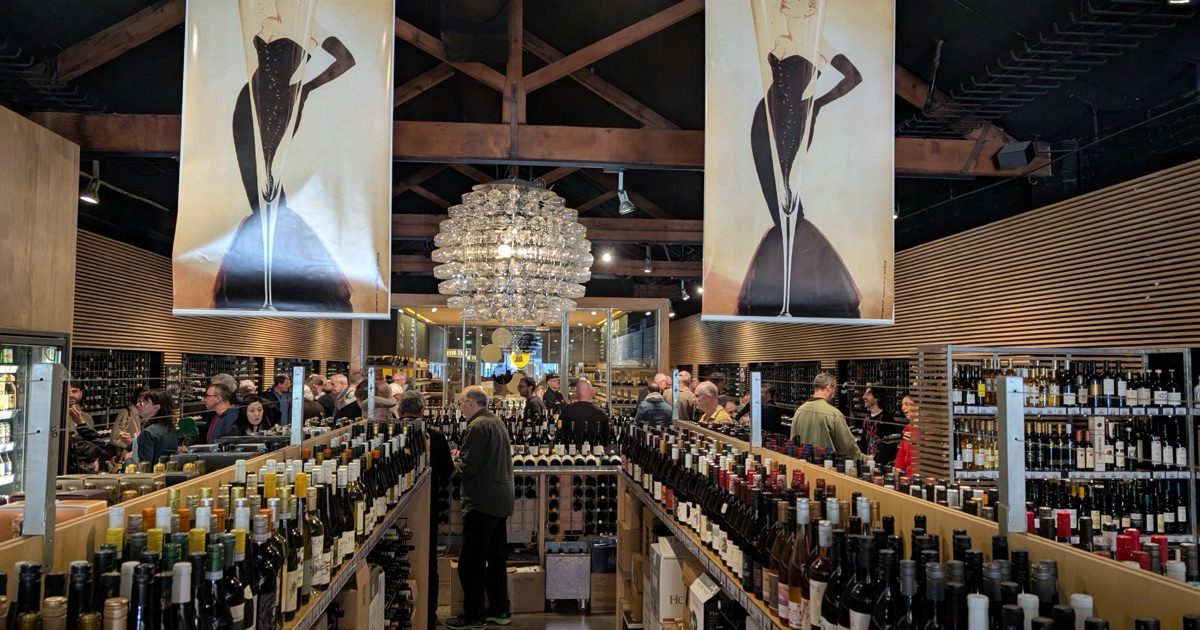
Prince Wine Store runs these most Saturdays, twelve to two, at their Melbourne store. Ten dollars, a different topic each week, walk-around, and the pouring is usually done by the importer or by the staff who chose the wines. Worth booking, because they can sell out. At that price it is one of the better ways to spend a Saturday lunchtime if you are trying to learn something, and a fair amount of what I know has come from rooms like that one.
This time they went the other way. The brief was lesser known grapes, pulled from wherever they happen to grow well, and mostly from Europe. Petite Arvine from the Valle d'Aosta. Chasselas. Blaufränkisch from Austria. Grapes that almost never get a table of their own.
Lesser known, not obscure
The aim isn't to be obscure for the sake of it. These are simply delicious wines that deserve a place in every wine lover's repertoire.
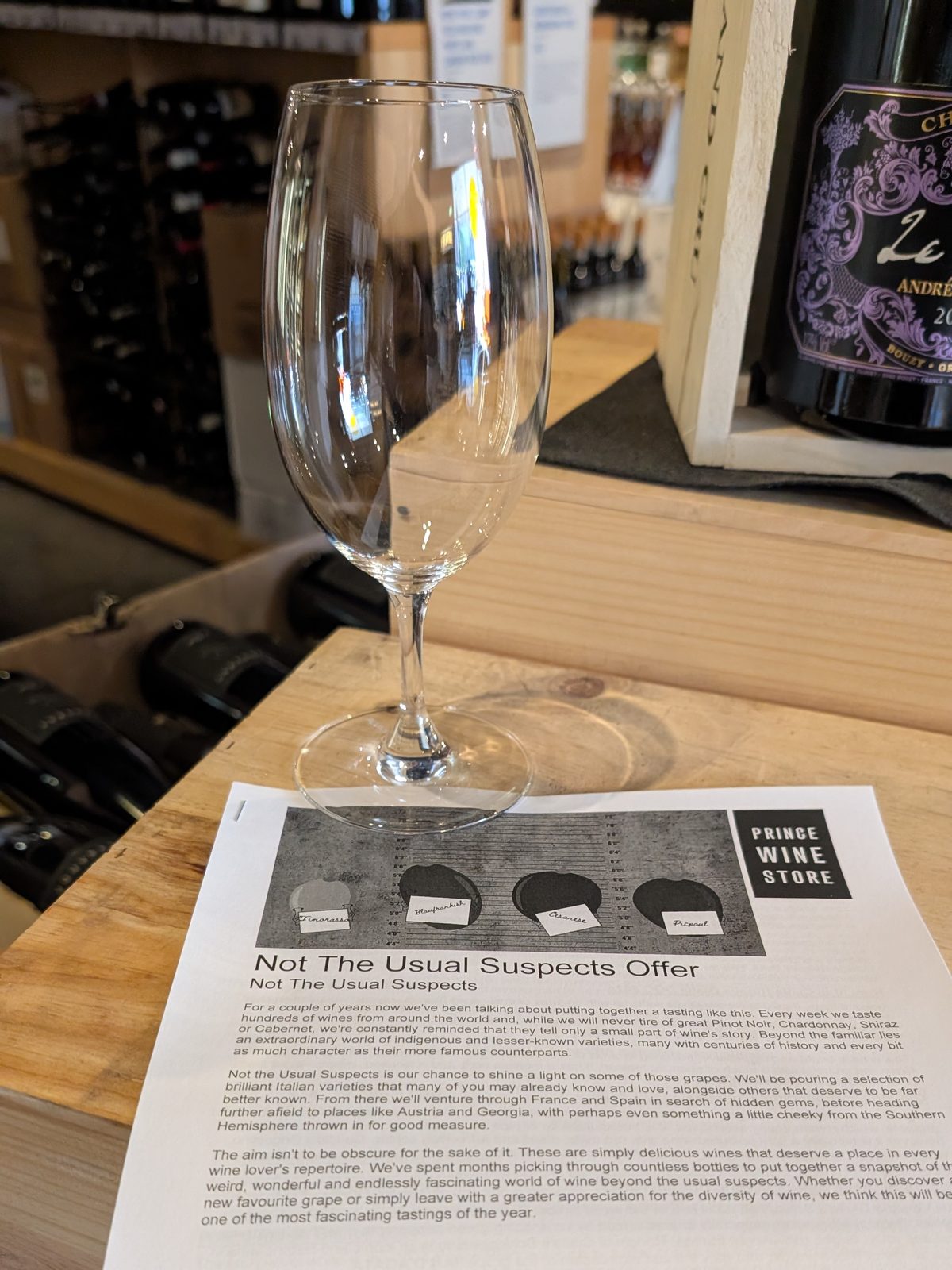
That is the right promise to make, and the one worth judging them on. There is a version of this idea that goes badly: a room full of curiosities you taste once and never think about again. This was not that. These wines were on the table because they are good. Being unfamiliar was the second thing about them rather than the first, and that distinction is the whole difference between a gimmick and a genuinely useful evening.
It was a full room, and a long lineup at around twenty wines, poured in small measures with spittoons on every table. That is the only way to work through a range like this and still have a functioning palate at the end of it.
A lot to hold in your head at once
Most of the still styles were represented. Aromatic whites next to fuller bodied ones. Fruit driven reds next to reds carrying real barrel influence. Most of the wines were young, a couple had some age on them, a couple leaned oxidative, and a couple were sweet.
That breadth is exactly what made it difficult. There is a lot to process in one session, and no familiar frame to hang any of it on. It felt like a WSET Diploma tasting where the lecturers had quietly decided to find the outer limit of what their students could hold in their heads at once. I mean that as a compliment. I learnt more in that room than I do at most tastings where I already know what is coming.
The wines that stayed with me
My top marks on the night went to two wines. The Quintodecimo Terra d'Eclano 2022, which is one of my favourite expressions of Aglianico and a wine I am always glad to see poured, and the Oremus Tokaji Late Harvest 2022, which was genuinely beautiful.
Both of them felt a little like intruders, though not because they were familiar. It was the price. The Aglianico was the most expensive wine in the room at $165, and while the Tokaji looked more modest at $77, that was for a 500ml bottle, which works out to well over $100 by the standard measure. Both of them earned their marks. But wines at that price are supposed to be that good, and the Aglianico will not show what it can really do for another five or ten years. They were the least surprising things in the room.
The wines that actually made the case for the evening were sitting between $42 and $50. The best of them finished a tenth of a point behind the Aglianico in my own notes, at a bit over a quarter of the price.
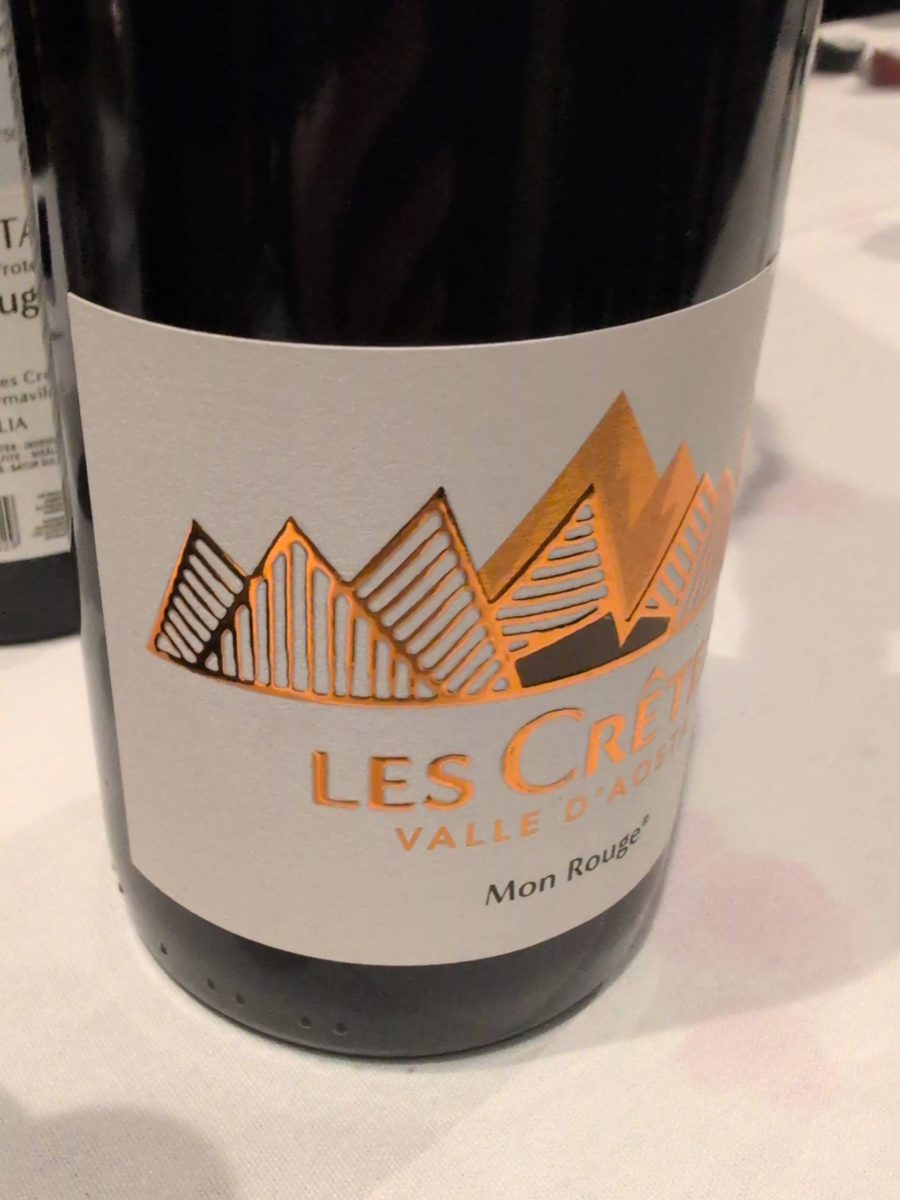
Les Crêtes Mon Rouge 2025
A pure expression of fruit, with nothing in the way. Stainless steel, and the alcohol is invisible. The crowd on Vivino (opens in new tab) rates it lower than I do, which I have made peace with. It is not a complicated wine and it is not trying to be. It knows exactly what it is.
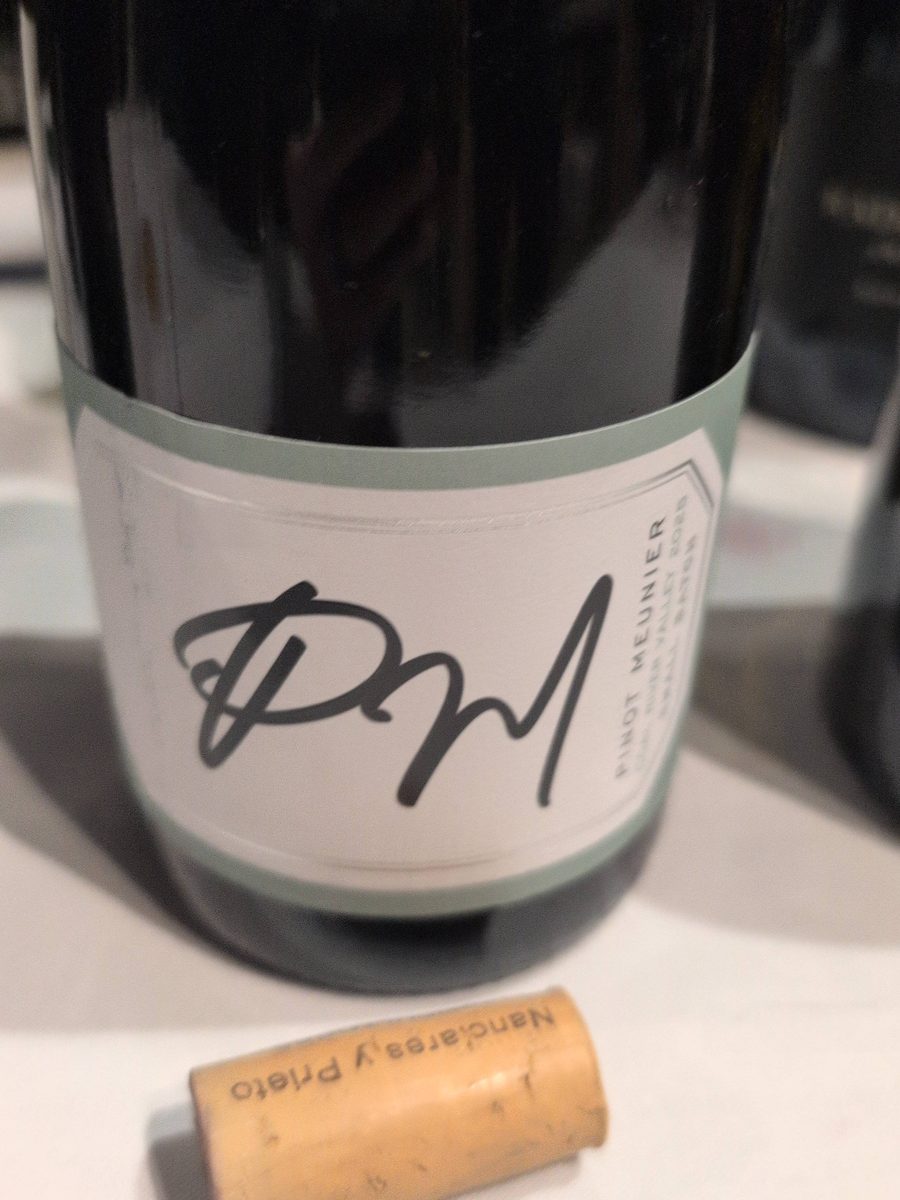
Dalrymple Pinot Meunier 2025
The only Australian wine in the tasting, and it earned its place. Pinot Meunier usually turns up as a supporting player in a blend rather than on its own label, so seeing it stand up unaccompanied, in a room of European wines chosen for quality, was one of the small pleasures of the night. It works properly as a still wine, with a good level of ripeness behind it.
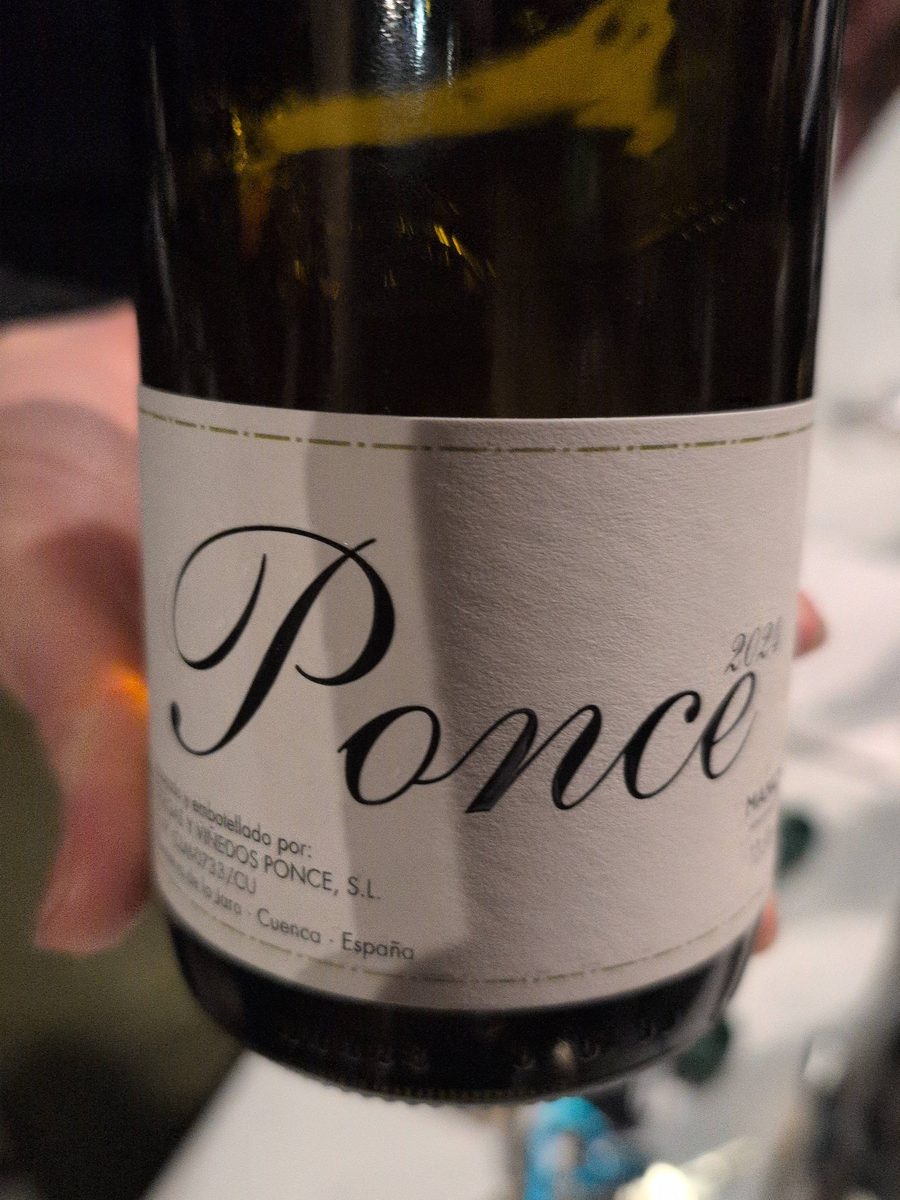
Bodegas Ponce Albilla 2024
This one marked me. Both the aromas and, more than that, the palate, which had a texture and a persistence I did not expect. Good structure, good length, and a palate managed with real care. It was the wine I kept going back to in my notes afterwards.
The pattern I keep noticing
Lined up like this, under difficult conditions, the cheaper wines handled themselves very well. In many respects they were the more interesting bottles on the table, and they told a more complete story than their expensive counterparts did.
What the wines I liked had in common was not a region or a grape or a style. It was intent, it was identity. Every one of them read as honest, well made winemaking with a clear idea behind it, executed without an enormous budget. That is a harder thing to do than it sounds, and it is far more satisfying to find than another technically flawless bottle at three or four times the price.
What to do with any of this
You do not need to hunt down a Petite Arvine to get something out of an evening like that. The useful lesson is narrower and more portable. When a wine is unfamiliar, you have nothing to fall back on except what is actually in the glass, and that is when you find out what you genuinely like rather than what you have been told is good.
If you want a shortcut to the same answer, my 60-second quiz works out your palate from the styles you already enjoy, and matches you to bottles I have tasted myself. It will not send you to an Aosta Valley white. It will tell you why you might like one.
Not sure where to start? The quiz matches wines to your taste.